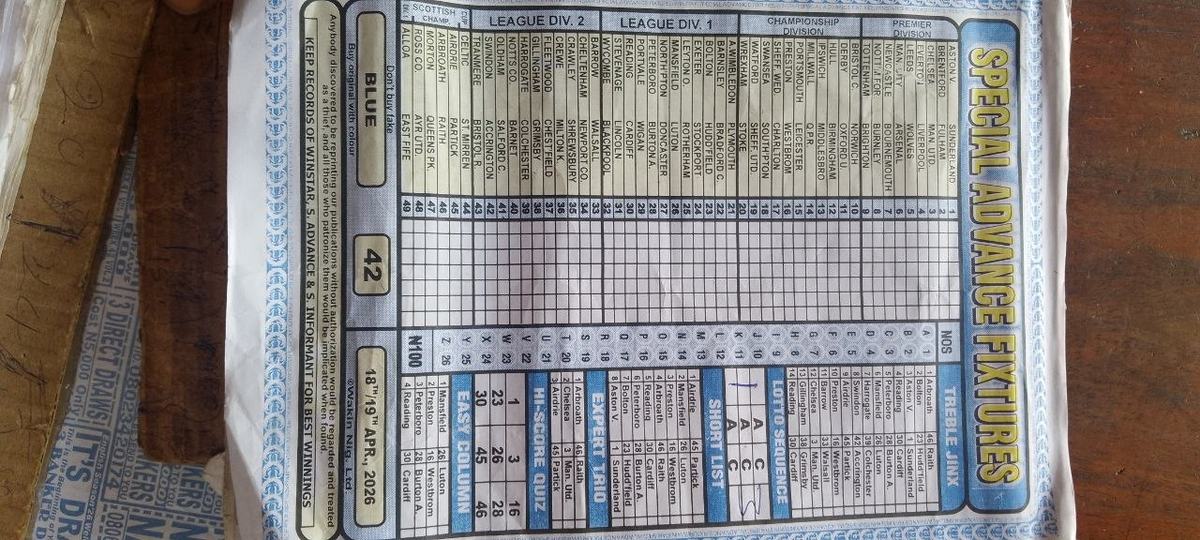
Walk up to anyone who's played the football pools for more than a season and ask them about score draws and scoreless draws. They won't hesitate. They'll tell you which one pays, which one doesn't, and probably share a story about the week a 0-0 in the dying minutes of a match cost them a fortune they were one result away from winning.
For everyone else — newer players, casual punters, or people just trying to understand why their results page shows two different categories of draws — the difference between a score draw and a scoreless draw seems small. Both are draws, right? Both end with the teams level on the scoreboard. Why does it matter how many goals were scored along the way?
It matters more than you'd think. Understanding this distinction is one of the first real steps from being a casual pool player to actually knowing what you're doing. Let's walk through what each one is, how they're treated by pool operators, and why the difference can make or break your week.
The Basic Definitions
Let's start with the simplest version of the answer.
A score draw is any drawn match where both teams score. So 1-1, 2-2, 3-3, 4-4, and so on are all score draws. As long as both teams put the ball in the net at least once and the final whistle blows with the score level, it's a score draw.
A scoreless draw is specifically a 0-0. Neither team scores. The match ends with goose eggs on both sides of the scoreboard.
That's the entire technical difference. But what flows from that small distinction shapes the entire pools game.
Why Pools Operators Treat Them Differently
The classic UK football pools game — the Treble Chance — was built around predicting score draws (I didn't know this myself until when I went really in). Not all draws. Score draws specifically.
Why? It comes down to math, history, and how the operators wanted to balance the difficulty of the game.
Score draws are uncommon enough to make the game challenging, but common enough to make winning feel achievable. On a typical week, around 70-80% of all drawn matches on a UK pool coupon are score draws, with the rest being 0-0s. Across the full coupon, you might see 10-14 score draws and a handful of 0-0s.
If pool operators paid out on every drawn match — including 0-0s — there would be too many winners. The pool would split into thousands of tiny shares, and prizes would shrink to the point where the game lost its appeal. By restricting the winning condition to score draws only, the operators kept the game tight enough that a winning line still feels rare and valuable.
That's why our results page lists them separately. When you check your line on a Saturday evening, you only count the score draws. The scoreless draws are listed for reference and pattern study, but they don't move you closer to a payout in the standard pools game.
The Cruel Reality of the 0-0
Every pools player has the same nightmare story.
It's late Saturday afternoon. You've been tracking your numbers all day. Seven of your selections have come in as draws, and you only need one more to cash. Your last match is sitting at 0-0 in the 88th minute, and you're celebrating in your head — that's eight draws, your line is alive.
Then the final whistle blows. The match finishes 0-0. And you remember.
It was a scoreless draw. It doesn't count.
This is the moment where every new player discovers, sometimes painfully, why the score draw vs scoreless draw distinction isn't just trivia. It's the difference between cashing your line and tearing up your coupon.
The cruelty of it is that the match did exactly what you predicted. The teams drew. You read it correctly. But because neither team managed to score, the result that should have completed your winning line counts for nothing.
This is also why experienced pools players study not just whether teams draw, but how they draw. A team that grinds out frequent 0-0s — defensive setups, low-scoring derbies, tactical battles — looks like a draw machine on paper but is actually a poor pick for the pools. You need teams that draw with goals.
Why Score Draws Happen More Often Than 0-0s
It's worth understanding why score draws outnumber 0-0s in football.
When two evenly matched teams play, the most likely outcome is that they'll both score at least once, with the final score landing somewhere close to level. Modern football, particularly in the higher tiers, produces goals. Teams attack, defenses leak, set pieces convert, and the average match in most major leagues sees somewhere between 2 and 3 goals.
A 0-0 requires something specific to happen: either both defenses (and goalkeepers) need to be exceptional, or both attacks need to be poor, or weather and conditions need to suppress goal-scoring across the entire 90 minutes. These conditions exist, but they're less common than a match where both teams find a way to score.
This is why, when you scan a typical pool coupon, you'll usually see a few 0-0s but far more 1-1s, 2-2s, and even 3-3s. The math of football leans toward score draws when matches end level.
That balance — score draws being the more common type of draw — is exactly what makes them the natural target for the pools game. Common enough to be findable, rare enough to be rewarding.
Reading the Results Page Properly
When you visit our weekly results page, you'll see two clearly marked sections at the top:
- Score Draws: followed by a list of match numbers
- Scoreless Draws: followed by another list of match numbers
This separation is deliberate. It lets you do two things at once.
First, you can quickly count your score draws. If your selected numbers appear in the score draws list, you've hit. If they appear in the scoreless draws list, you haven't — even though the match did finish in a draw.
Second, you get a feel for the week. A week with lots of score draws and few 0-0s is a "high-paying" week — more winners, smaller individual shares but more chances to cash. A week with only a few score draws and several 0-0s is a "low-draw" week from the pools perspective, even if the total number of drawn matches looks normal. These are the weeks that produce huge individual payouts because so few players hit a winning line.
If you're studying patterns over time, the scoreless draws are still useful information. Which fixtures consistently produce 0-0s? Which teams are 0-0 specialists? Avoiding those matches in your selections can sharpen your line over the long term.
Some Pools Games Do Count 0-0s — But Most Don't
It's worth noting that not every pool game in history has treated 0-0s the same way. Different operators over the years have run variations:
- Treble Chance (classic): Score draws only. The standard, traditional UK pools game.
- Easy Six / Lucky Numbers: Some side games count any draw, including 0-0, but offer different (usually smaller) prize structures.
- Modern fantasy or hybrid games: Some online pools-style products do count all draws, but these aren't traditional pools betting in the strict sense.
If you're playing the standard Treble Chance — which is what most UK and African pool players are doing — score draws are what matter. Always check the rules of the specific game you're playing, but assume score-draws-only unless told otherwise.
Building It Into Your Selections
Once you understand this distinction, your approach to picking pool numbers should shift.
Instead of asking "which matches will end in a draw?" you should be asking the sharper question: "which matches will end in a score draw?"
That changes how you study fixtures. You're now looking for:
- Evenly matched attacks. Teams that score regularly playing other teams that score regularly. Both sides need to find the net.
- Open, attacking sides. Avoid defensive sides that grind out 0-0s. Look for teams that play with intent on both ends.
- Mid-table clashes between scoring teams. Two teams of similar quality, both with positive goals-for records, are prime score draw candidates.
- Recent form with goals on both sides. A team that's been scoring and conceding lately is more likely to feature in a score draw than a team that's been winning or losing 1-0 every week.
Conversely, you'll start to spot fixtures that look like draws on paper but are really 0-0 traps:
- Two defensively strong sides facing each other
- Teams playing for survival who can't afford to lose
- High-stakes matches where both managers play conservatively
- Cup ties or first legs of two-legged ties where the priority is "don't lose"
These matches often draw — but they draw 0-0, which doesn't help you in the pools.
Why This Knowledge Compounds Over Time
Pool players who stick with the game for years build a quiet expertise about which matches produce score draws and which produce 0-0s. They notice that a particular fixture in the lower divisions has finished 0-0 four years running. They notice that a specific team scores in 90% of their drawn matches. They notice that certain referees produce more goals than others, that certain weather conditions suppress scoring, that international break weekends often produce flatter games.
You don't need to memorize all this to start playing well. But over time, paying attention to how matches draw — not just whether they draw — is one of the best things you can do to improve your selections.
Our archive and weekly results pages are designed to support exactly this kind of long-term study. Every week is preserved, score draws and scoreless draws clearly separated, so you can go back months or seasons and start building your own picture of which fixtures and patterns reward pools players and which ones don't.
Final Thoughts
The difference between a score draw and a scoreless draw is small on the scoreboard but enormous in the pools game. Two matches that look identical at full-time — both ending level — sit on opposite sides of the line that separates winning from losing.
Once you understand this, the pools start to make more sense. You stop being frustrated by 0-0s that "should have counted." You start studying fixtures with a sharper eye, looking for matches where both teams are likely to score. And you begin to appreciate why pool operators have been running the game this way for nearly a century — because it produces the perfect mix of skill, study, and luck that makes the pools different from any other form of betting.
Next time you fill in your coupon, ask yourself one extra question for each pick: "Will both teams score in this one?" If the answer is no, even if you think the match will draw, you might be picking a 0-0 trap.
The goalscorers don't just decide the match. In the pools, they decide your line.